
I Think Janeane Garofalo Was Passing the Comedy Torch in Wet Hot American Summer (2001)

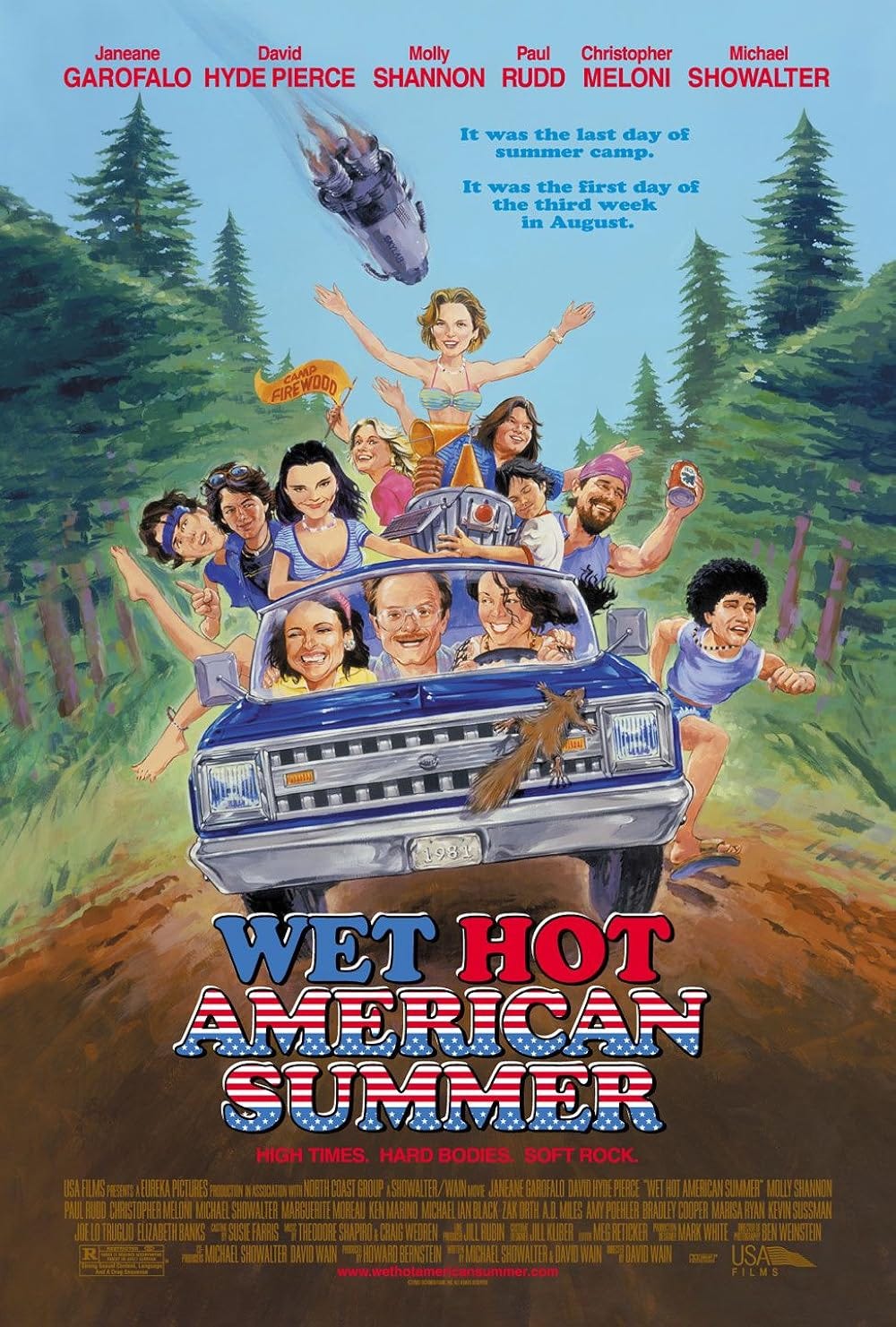
On Tuesday night, as part of the SF Sketchfest in San Francisco, Janeane Garofalo took the stage for a 25th anniversary screening of Wet Hot American Summer. She was flanked by writer/director David Wain and co-stars Ken Marino, Michael Ian Black, Marguerite Moreau, and Jo Lo Truglio.
I was not at this screening, sadly.1 But my wife and I did happen to be in San Francisco two days earlier—when Garofalo was doing a standup set in the midst of the three-week comedy festival. With nothing else on our agenda that night, I figured we might as well pay tribute to a screen legend of my youth.2
As soon as I bought the tickets, my mind began to wander. Where had Janeane Garofalo even been all this time? She hasn’t released a standup special in nearly a decade. And I couldn’t recall seeing her in any movies since…well, since Wet Hot American Summer.3 She was only 36 when that film was released.
After being everywhere for the better part of a decade, did she stop getting good parts just because she was on the verge of middle age? You don’t need me to tell you that this has happened to actresses ever since the dawn of the silver screen and is still happening today. So it could be that simple. But something about her situation felt a bit more unique.
When I told my barber I was gonna see Garofalo perform, he posited another theory. He believes that her whole vibe was so 90s that she wasn’t able to reinvent herself as the culture moved forward into a new century. My other barber agreed; he said she’s “like the Daria cartoon in real life,” which I had never considered but is very accurate.4
And then there are a handful of points on her timeline that coalesce around these two larger observations. She quit drinking in 2001 and shifted her lifestyle accordingly. She got heavy into politics and co-hosted a show on Air America Radio for a handful of years. And after that shift, she had difficulty breaking back into the film industry when she was being asked to audition rather than simply being offered parts like she was in her heyday.5
Having just watched her perform for an hour—she noted multiple times that she’s “not a good joke writer” and described her standup style as more like filibustering—I can add a few observations of my own. Garofalo is the kind of public figure that has eschewed all efforts to keep up with the times. Whether this was her original intent or a philosophy that evolved as she got older (and got fewer opportunities), she seems more than content with her analog existence. In fact, she delivered extended bits about how much she hates her cell phone (she doesn’t save any numbers and unsubscribes from group chats every chance she gets) and how much she hates Gen Z slang (she targeted all the usual suspects, particularly “today years old” [which is one I happen to agree with]).6
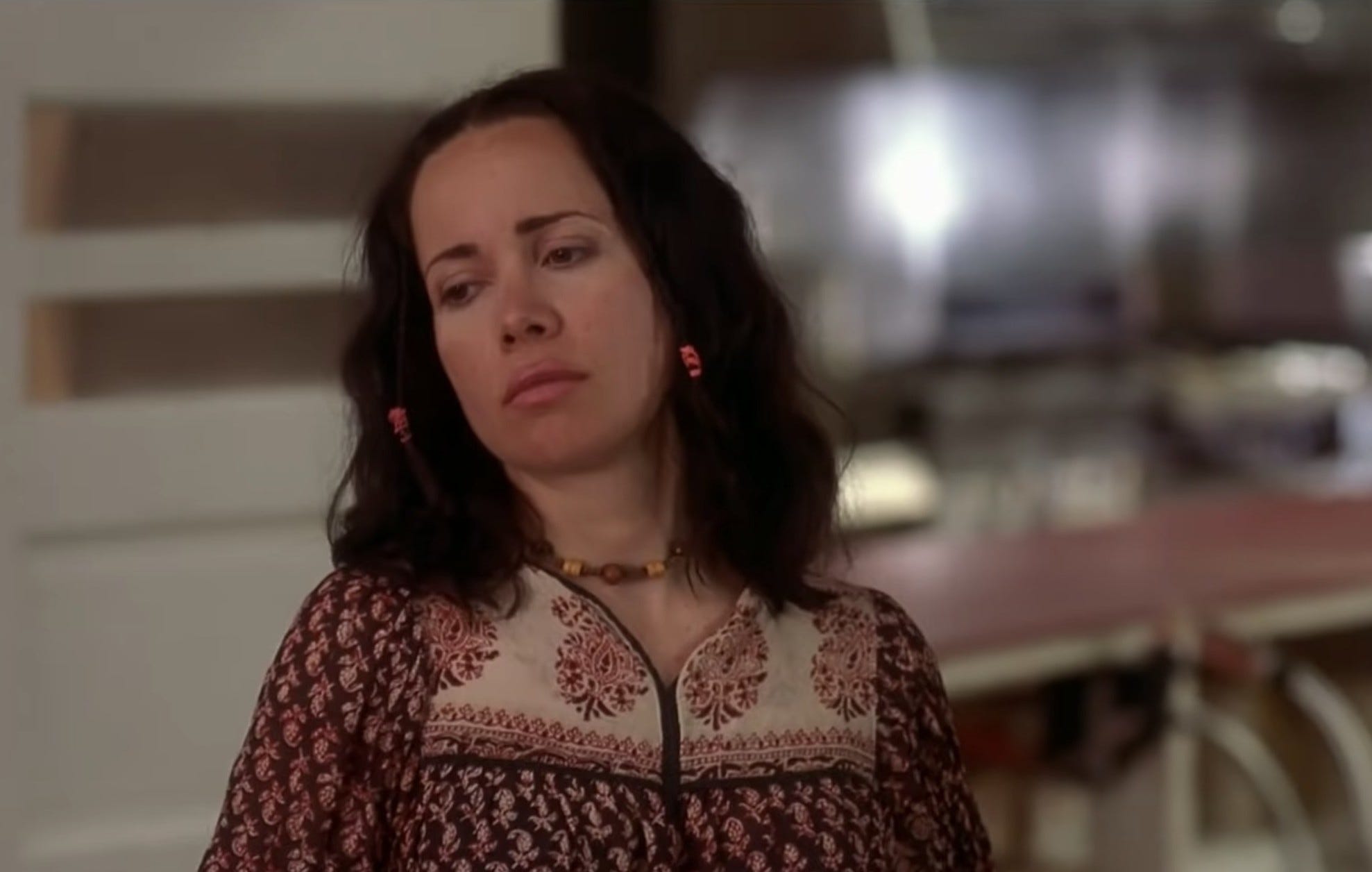
So there wasn’t one reason but several, as these things usually go. And as I considered it more and more, I couldn’t help but think of her character from Wet Hot American Summer—and how it could be seen as an extratextual turning point in her career trajectory.
The film takes place on the last day of a summer camp in 1981. And while there’s less of a central plot and more of a tapestry of narrative threads—it’s a hangout movie as much as it is a comedy—the other characters all orbit around Garofalo’s. She plays Beth, the camp director, and aside from a visiting astrophysics professor (David Hyde Pierce), a cook who talks to a can of vegetables (Christopher Meloni), and the legendary Molly Shannon, she’s the adult in the room. Which is fitting, given that Garofalo (who was born in 1964) could’ve been a camp counselor herself in 1981.
But it’s also fitting because of the ensemble around her, most of whom are about a decade younger than she is. Looking back a quarter century later, it’s easy to champion this as one of the greatest comedy casts ever assembled. Future movie and TV stars like Paul Rudd, Elizabeth Banks, Bradley Cooper, and Amy Poehler are all in the mix alongside career comedians like Marino, Black, and writer/director Michael Showalter (who co-wrote this film with Wain).
It’s almost as if Garofalo is passing the torch to the next generation.7 I’m sure she took the role because she believed in the material, but I wonder if she arrived on set, observed the talent around her, and leaned even further into her inner Beth. I think it stands as one of her best performances without the meta reading, but the passing of time has made it even more special to me.
Maybe Garofalo is just doing her best to live in the 80s summer camp of her mind. A place where cell phones don’t exist and nobody says “it’s giving.” A place where she has a simple but important job to do and doesn’t have to worry about cultural and industrial pressure to change. And if she is, who could blame her, right?
Wet Hot American Summer was streaming on Starz when I started writing this, but now it’s not. It is, however, available to rent elsewhere.
My friends Holly and Rob were though. Shouts out to Holly and Rob.
I was also tempted by a couple other Sketchfest events—namely a John Hodgman set and a Mark Mothersbaugh performance with a local symphony—but they were on the other side of town. Janeane was only six blocks from our hotel. Easy call.
I have seen Southland Tales, which she appears to be in, but I deliberately forgot as much about that movie as I could.
Shouts out to my barbers as well. At least one of them subscribes to this newsletter.
The silver lining here, as pointed out by this New York Times, is that Garofalo never sold out. She really is as 90s as it gets.
She does, however, listen to some modern music. She cited Fontaines D.C. and Carly Rae Jepsen, in fact, which means we are the same.
In fairness to Janeane, who was technically born just a year before Gen X, she may not have been a member of their generation, but she certainly helped define it. Also, these actors are mostly 5-10 years younger, not 20.
Oh man... prepare for a thesis-length response to this.
Your barber is right, I think- Janeane was so ultimately 90s she could never reinvent herself in the 2000s- let alone the decades after. However, post-Y2K antifeminist backlash meant there was an extinction-level event for the snarky outspoken brunette as a cultural archetype. Seriously, during the Bush years there was Tina Fey and that was it, and she was pretty apolitical. Just look at the covers of Ms. Magazine, where Garofalo graced in Summer 2003- all the cover girls from the earlier part of that decade were cultural figures who got their start in the 90s- Margaret Cho, Ashley Judd, Camryn Manheim, Whoopi Goldberg, etc. There were literally no feminist actress/comedian types popping up on the scene. They had to hide on Air America and in the gay club circuits and between the pages of BUST until the cultural pendulum swung back.
Look at the shift from the 90s to aughts more broadly (ha!)-- we went from riot grrrl and female MCs and Lilith Fair and Roseanne and Murphy Brown and Living Single and Daria and a bunch of fantastic women directed indie movies to... well, it was a dark period! Even The Anointed Lesbian TV Host and Comedian going from Rosie to Ellen (plus Rosie's extremely public scapegoating) says it all. Mouthy progressive broads got the boot, Janeane was no exception (see also, the handwritten "Dixie Chick" on her t shirt on the Ms. cover, ahem). It literally was not until the advent of Tumblr that things turned around at scale.
Sometime in the first Dubya term, my mother saw Janeane Garofalo do standup at a Dem fundraiser in DC. "She was really hungover, and her style of comedy works in a nightclub, not over brunch," I remember my mom saying. I'd like to think that JG transitioning out of the public eye was a deep commitment to not selling out and not the usual blend of misogyny, ageism and backlash that sidelines women entertainers.
One more Dust on the VCR- relevant aside: I recently found out about a 1997 Garofalo movie called The Matchmaker, where she plays an assistant to an Irish American Boston politician who's sent back to Ireland to court the vote. As my interest in the Irish diaspora cultural revival of the 90s is on par with my obsession with the 90s-00s feminist cultural 180, I just went ahead and ordered the DVD.
Why do you have two barbers?