
Why Didn’t the Clue (1985) Theatrical Gimmick Become a Little Bit More Common?

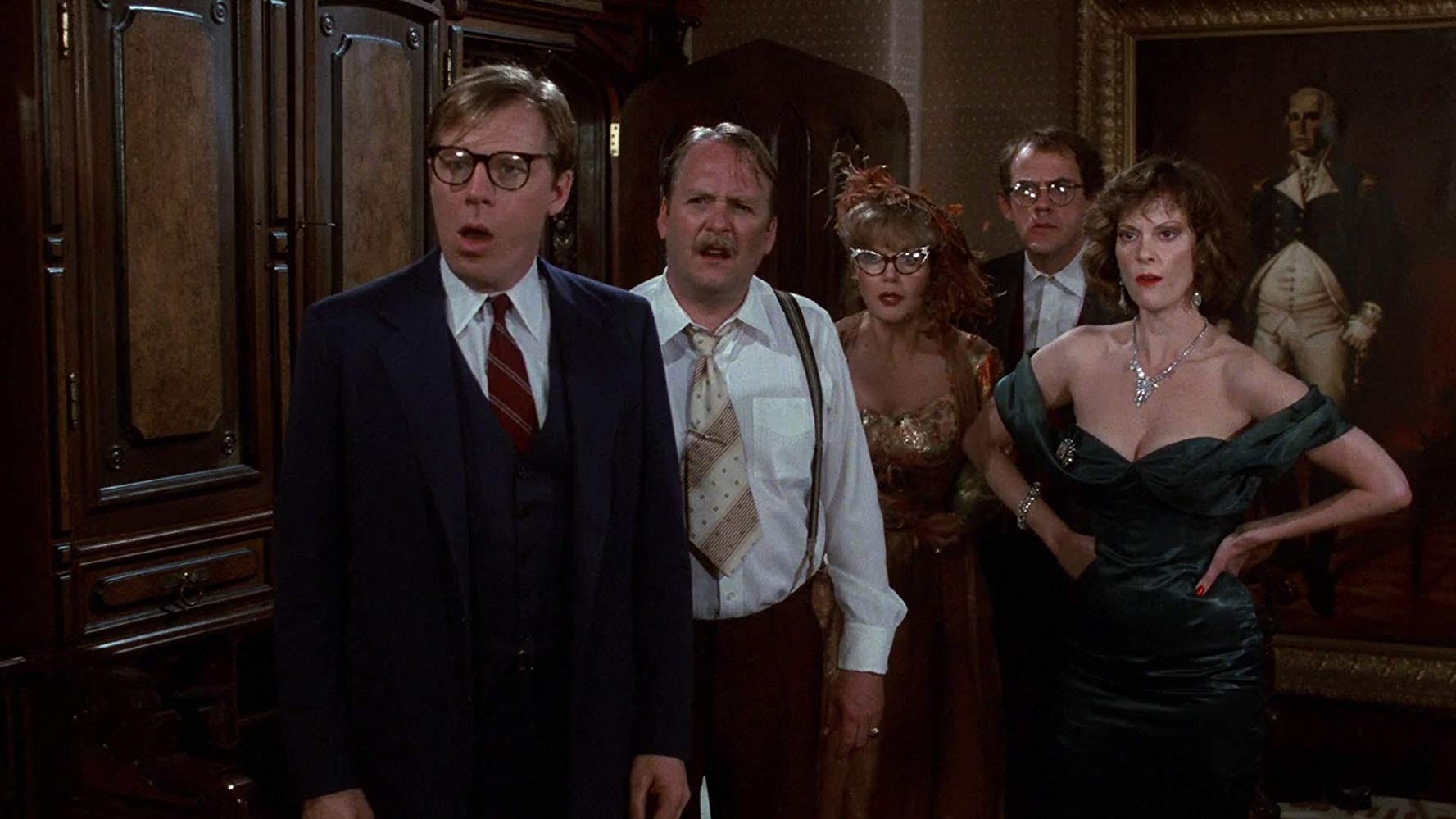
Many of you readers already know the history behind the theatrical release of Clue. But for those who don’t, let’s begin by traveling back to 1981.
The legendary Debra Hill was in the process of acquiring the adaptation rights to Clue, the popular murder mystery board game that was concocted by English musician Anthony E. Pratt when he was holed up in his Birmingham home during the WWII air raids.1 It would be the first adaptation of a board game. But this was the 1980s, and IP-driven blockbusters were all the rage. It was just crazy enough to work.
And Hill’s original team would’ve held quite a pedigree. John Landis was committed to direct the film—he still ended up contributing a crucial element to the screenplay—and he was apparently courting a Broadway dream team in Tom Stoppard, Stephen Sondheim, and Anthony Perkins to help him write the screenplay.2
When Landis departed, the studio recruited English actor Jonathan Lynn to finish the screenplay and direct the film. Though he’d written one feature and many episodes of TV by this point, it was Lynn’s first directing gig. I don’t know if an adaptation of a board game was the debut he dreamed of, but he wound up in a pretty great situation. He had a great cast. (Tim Curry! Madeline Kahn! Christopher Lloyd! Michael McKean!) He had a great producer in Hill.
And he had one hell of a narrative stunt baked into the film’s conclusion.
That crucial idea from Landis was to give the film three different endings. There were originally four endings, in fact, but Lynn cut one that didn’t work for him.3 If you’ve seen Clue in its home viewing format, you already knew this, as the film concludes with all three endings: “How it Could Have Happened,” “How About This?” and “Here’s What Really Happened.” On paper, it’s little more than a gimmick, but because Lynn executed it so well, it’s a clever way to wrap up a murder mystery that had some freedom to get weird with the story.
But “here’s what really happened” when the film was originally released in theaters: Three different prints were created, each containing only one of the film’s three endings, and theaters were randomly sent one of those reels. Some theaters let the ending be a surprise to viewers. Other theaters went and spoiled it for them by advertising which ending they were screening, though I imagine that helped drive a few extra ticket sales for anyone trying to catch all three versions.
It may have been a marketing gimmick, but in my opinion, it’s a fantastic one. Even if the film only made $14.6 million, just shy of its production budget. I think that the decision to take it one step further by including all three endings in the home video release went a long way toward establishing Clue as a cult classic. Besides, isn’t that the only way to conclude an adaptation of a board game? Isn’t the whole idea of a board game that you can have many different conclusions?
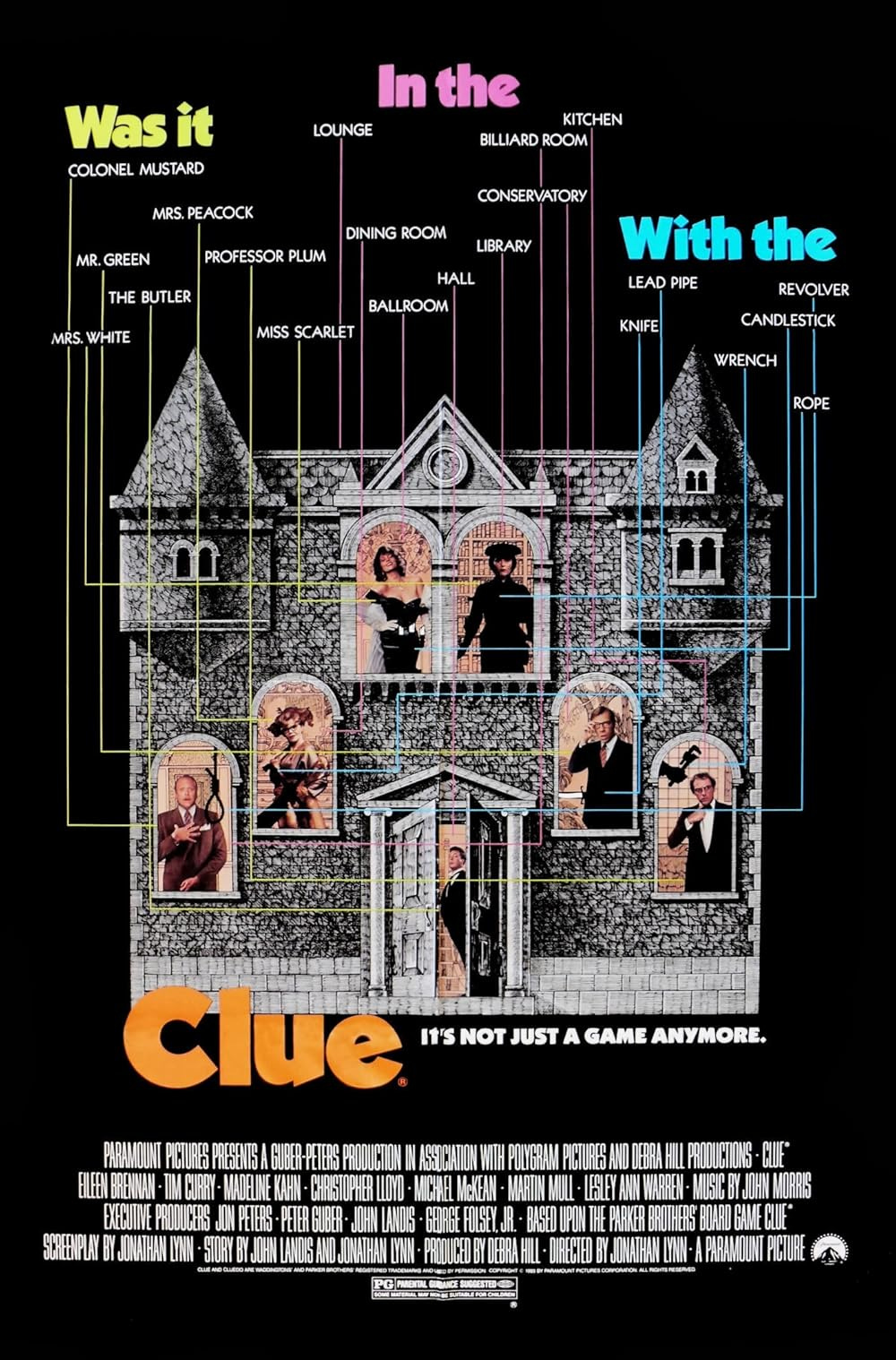
Since Clue wasn’t a box office hit, this gimmick didn’t really get repeated.4 But it’s been 40 years, IP is king—for better or for worse—and everything old is new. Shouldn’t we give it another try?
The easy argument against recycling the Clue tactic is the internet. Word would inevitably get out, and most viewers wouldn’t be surprised by what they see (or don’t see). But that’s also a great way to create instant lore around your film. Franchise features often see a lot of repeat business, and what better way to ensure viewers will come back than to guarantee a new wrinkle to a familiar experience?
It’s not like we’re living in a gimmick-free world anymore. Just this year, before the first trailer was even released, it was announced that Matthew Lillard would be in Scream 7—despite the fact that his character Stu Macher dies in the first film. If that’s not a marketing gimmick then I don’t know what is. And it’s not like this is a franchise that should be desperate to put butts in seats. Scream VI was the first installment since Scream 2 to make $100 million at the domestic box office.5
Maybe I’ll be proven wrong, but I can’t fathom a convincing narrative excuse for bringing Stu back into the franchise.6 That said, if a franchise like this is going to resort to stunt casting, why not lean into it? Imagine if we found out a week or two before Scream 7 hit theaters that the film would have three different endings with three different killers(es) and theaters would be randomly sent one Clue style. Even someone like me who was disappointed by the last two Screams would be intrigued by that prospect.
Martin Scorsese caused a minor online controversy in 2019 when he said that superhero movies are more akin to amusement park rides than true cinema. And even though I really like a lot of the movies he was slighting in that interview, I think he has a point. IP-driven films, especially deeper sequels, will always be surrounded by audience expectations. We expect certain things from certain franchises. So why not deliver on those expectations while also doing something a little different rather than the same ol’ thing each time?
If Clue is any indication, this kind of gimmick might help solidify the movie’s reception beyond its theatrical run. Now we just have to convince the studios that making well-liked films is more important than making profitable films.
Clue is now streaming on Philo and MGM+, and it is available to rent elsewhere.
This marks two weeks in a row that we’ve featured a Debra Hill production in the newsletter. As someone who owns a t-shirt that says “A Debra Hill Production,” I’m going to pretend that I did this on purpose.
I don’t often indulge in the “what if?” game when considering film history, but man, I really want to read this version of the screenplay.
The scrapped ending involved Wadsworth (Curry’s butler character) admitting to committing all of the murders and then poisoning all six guests before stealing a police car and falling prey to a pack of police dogs. Tough stuff!
My brief research tells me that Unfriended: Dark Web did something like this, even though I don’t recall hearing about it at the time. Apparently, two different versions of the film were sent to theaters, and projectionists were told to await further instructions on which one to screen. The director, however, insists there’s only one ending. Either way, I think Unfriended is the perfect franchise to try a gimmick like this. Too bad the sequel made about a quarter of what the original did.
I’m still mad online that the sixth Scream film switched to Roman numerals just to be clever in the poster design. I can’t decide if I’m less mad or more mad after they switched back to digits for Scream 7.
I will roll my eyes if they tell me that Stu actually survived the events of the first film and went into hiding, but I will lose my mind if they tell me that Stu had a twin brother. I wouldn’t put anything past them at this point.
I was just talking about the Clue endings last week to my Chapman class! Doing three prints and three mixes and three interpositives must have been a post-production nightmare. In theory would be much easier today.
Gimmick filmmaking can work but Boy can it be a drag sometimes. In my Hood we don't like it.