
Paris is Burning (1990) is a Sports Documentary About Queer Black Joy

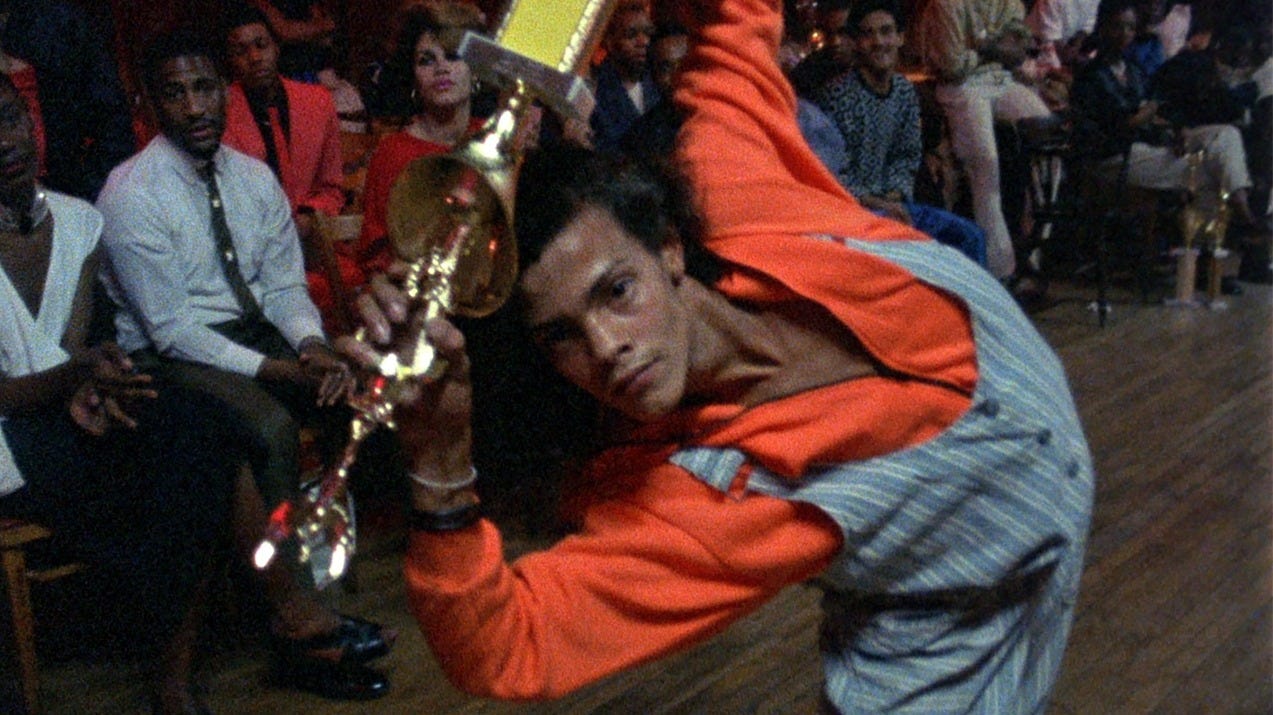
Today’s issue of Dust On The VCR is a subscriber request! This film was brought to you by my good friend Charlie Townsend, who is one of my favorite people despite the fact that we’ve never actually lived in the same place. Every time we hang out, I know that I’m going to laugh my ass off, but I know there’s also a good chance I’m going to learn a thing or two. Having worked in politics for many years, he’s one of my go-to sources for insights every election year—he’s the first person who informed me that Doug Jones (who, again, is on Substack!) would win the night of that special election in 2017, in fact. But he’s also one of my go-to sports buddies regardless of the season. (He roots for all of the Atlanta teams, but hey, nobody’s perfect.) For Pride Month, Charlie implored me to watch this queer cinema classic, and I’m thankful that he provided an excuse for me to do just that.
Wanna request a film for a future issue of Dust On The VCR? Subscribe to the paid version!
It’s a great time to be a sports fan in America.
The Men’s World Cup kicked off yesterday—here in North America, no less.1 The NBA Finals has captured the attention of basketball die-hards and sports moderates alike thanks to the Knicks’ record-setting comeback win. The WNBA season is in full swing too, and the NBA Draft is only a couple of weeks away. On the ice, the Stanley Cup Final looks like it might go a full seven games. And on the grass, baseball season is starting to heat up.2
It’s also Pride Month, that wonderful time of year when the LGBTQ community publicly celebrates their God-given right to simply exist and enjoy their lives—despite the annual protestations from groups of people who don’t want them to do that because they think it’s contagious or something.
From a distance, one might think these two realms have very little to do with each other. And one might point to the fact that there are very few openly gay male athletes as evidence.3 But one viewing of Paris is Burning, a documentary that chronicles the drag subculture within the gay community of New York City, would be enough to dispel that assumption.
Paris is Burning hits the ground running by dropping the viewer directly into its world. We quickly meet several performers from the mid-/late 80s ball competition circuit to learn a bit about their background, especially as it pertains to the balls themselves. We don’t just see them walk their makeshift runways—we understand why it means everything to them. Some come to the balls for self-actualization, but some use it as a survival mechanism.
In other words, the film follows the sports documentary format that ESPN helped popularize two decades later. Paris is Burning could be a 30 for 30 if you eschewed the target audience’s expectations.
While given a glimpse of the competitions themselves, we come to understand that there’s a scoring system—based on relatively subjective criteria like “realness,” or their ability to mimic a more common stereotype—that resembles the NBA Dunk Contest.4 We see the enormous trophies that they stand to win and carry with them along the streets of New York. We get to know the teams, known as “houses,” that form bonds together and compete against each other. We even learn that these houses can be particularly cutthroat in pointing out fouls or disqualifications for other performers; one person is accused of wearing a woman’s coat while donning a macho persona, but they insist the buttons are on the right.
In other words, it checks all the right boxes to compel a viewer who has no familiarity with this world. How often do you hear someone say “I don’t really know anything about [a particular sport], but that documentary was great”?
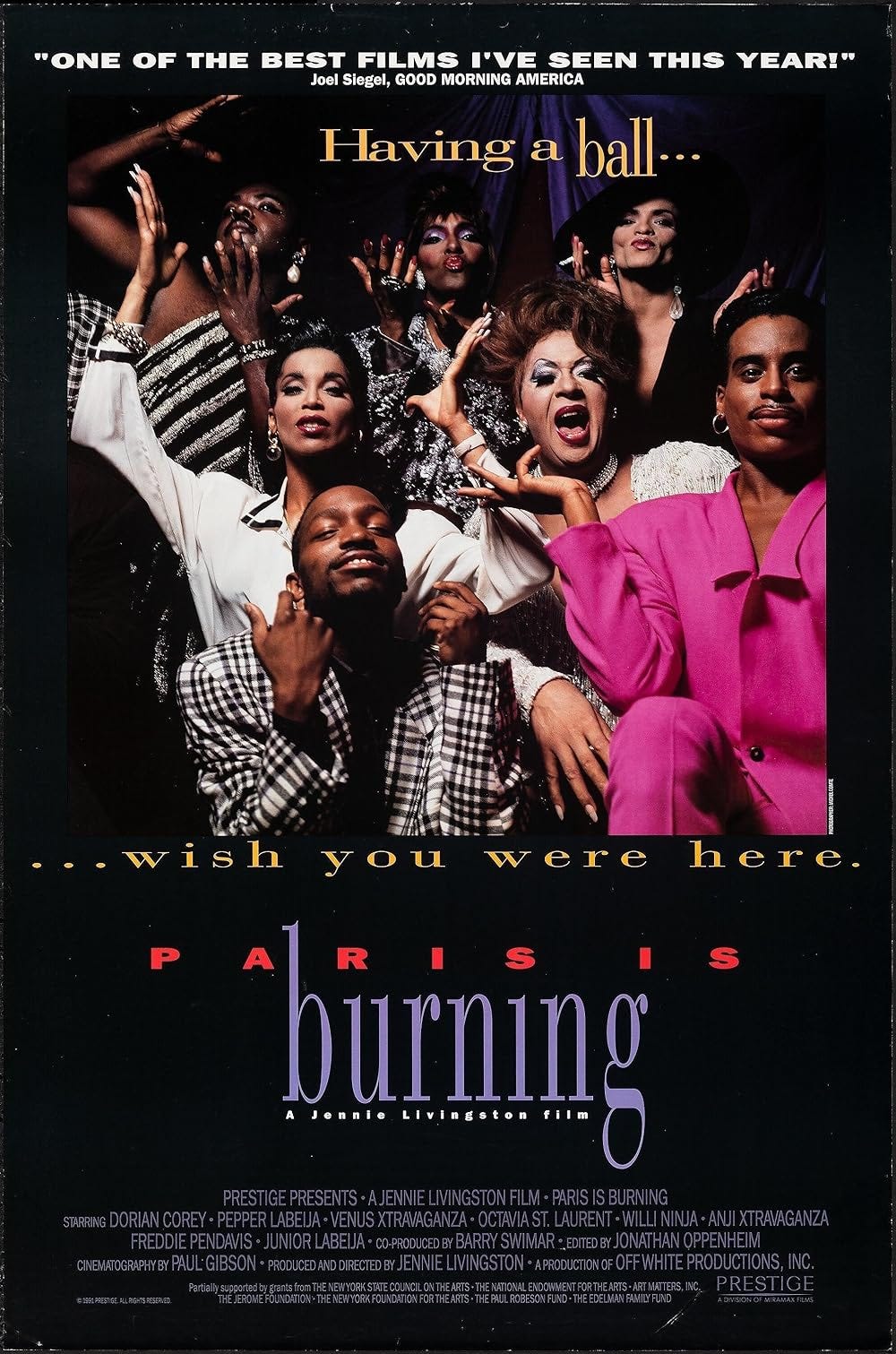
That’s what great sports docs do. There are plenty that focus on a certain event or a particular historical era or even an entire sport, and those can be engaging to various degrees. But the most successful ones are the films that focus on the people above all. The ones that don’t settle for simply what the sport is and how good these people are at it but also examine who they really are and why they’re passionate about their craft.
And in what might seem like a paradox, sports docs are often more compelling if we don’t know much about the people at all.5 Sure, it can be fun to take a deeper dive into famous athletes’ stories—The Last Dance is a great example—but some of the most memorable spectator journeys are the athletic quests we go on with people we just met. If Hoop Dreams was 96 minutes shorter, it might move a lot like Paris is Burning.
So how does one sell this landmark film about the lives of queer Black men to the beer-drinking, wing-eating sports fanatics crowd? Many of whom are uninterested at best in the lives of gay people, especially those who perform in drag?
It won’t be easy. It never is. That’s how we’ve gotten into this current state of affairs in the first place.6 But as Roger Ebert famously said, that’s one of the tenets of cinema in the first place: “For me, the movies are like a machine that generates empathy. It lets you understand a little bit more about different hopes, aspirations, dreams, and fears. It helps us to identify with the people who are sharing this journey with us.”
I promise I won’t stand on this soapbox for too long, but after watching Paris is Burning, I thought about the people in my life who need to watch films like this. The ones who need to understand the different hopes, aspirations, dreams, and fears of the groups and individuals who are affected by their voting decisions. The ones who just want to be treated fairly so they can focus on their own passions, whether that’s ball competitions or any other athletic event.7
I’m not naive enough to think that 78 minutes is all it takes to change someone’s political philosophy. But maybe it’s a start. Growth takes time and effort. And while Pride is certainly a month-long celebration, it’s also an opportunity for education. As long as you’re willing to do the work.
Whatever’s bringing you joy this month, reader, I hope you find plenty of it. Happy Pride. Go Knicks. And viva la Copa Mundial.
Paris is Burning is now streaming on HBO Max, the Criterion Collection, and Plex, and it is available to rent elsewhere.
Congrats to Mexico and South Korea and any readers with allegiances to either country!
Pun intended, unfortunately. It’s really hot outside, folks. Please stay hydrated and use sunscreen.
Rest in peace to Jason Collins, America’s first active and openly gay athlete, who passed away last month.
I know that the Dunk Contest wasn’t the first or last event to feature judges holding up cards numbered 1 through 10—my mother watches Dancing With the Stars—but it has to be the most popular sports example, right?
Last year, I watched Earnhardt, the four-hour docuseries on the NASCAR legend, despite knowing very little about Dale and not caring about racing at all. By the end of the series, I would’ve run through a brick wall for the whole Earnhardt family.
Speaking of the World Cup, I’m very excited about it as always, but what an utterly embarrassing time to be hosting the damn thing. My sincere apologies to any soccer fans visiting from anywhere else.
If you’ve ever been to a drag show, you know that they’re athletes.
Unique take! I don't disagree.
Storytime: I first encountered Paris is Burning in a chipped plastic VHS case at the Silver Spring, Maryland public library, where it was shelved among the gay/sociology books, not with the rest of the movies, including documentaries. I guess the idea was that if a film was educational enough, it belonged to the Dewey Decimal, not the Blockbuster-style alphabet.
Note: "Paris Is Burning" is not to be confused with the 1960s WW2 film "Is Paris Burning?"