
Following (1999) is Christopher Nolan’s Syllabus for No-Budget Feature Filmmaking

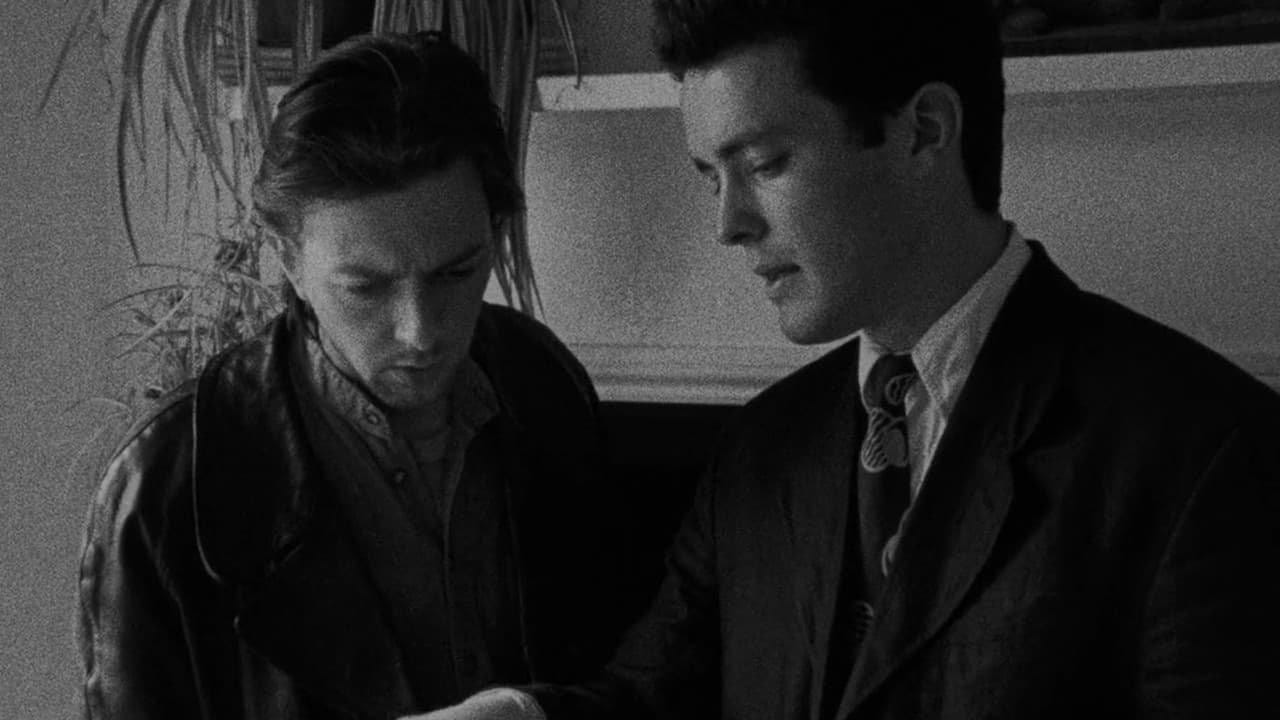
Whether you’ve pledged your ongoing loyalty to him, you’ve grown thoroughly tired of him, or you oscillate somewhere in the middle, Christopher Nolan has become the biggest filmmaker in the world.
No, his career hasn’t matched the heights or the output of elder statesmen like Steven Spielberg or Martin Scorsese, but those legends are at the tail ends of their careers and seemingly struggling to get studio support for their original ideas.1 Meanwhile, after winning a slew of Oscars and earning nearly a billion box office dollars for a biopic about a guy you probably learned about in high school history class, Nolan has seemingly earned enough clout to make whatever the hell he wants. Which is why he made The Odyssey, of course.2 Something that truly only he could’ve done at this moment in time.
But just like any noteworthy artist, he wasn’t always operating at this scale. He was once an English major in his mid-20s with some film equipment and some good ideas. And he used those limited resources—plus a handful of cast and crew who all had day jobs—to make Following, his feature film debut that enjoyed a U.S. premiere at the Slamdance Film Festival and set him on a path to an illustrious career.3
Much has been written on Following, Nolan’s 70-minute crime thriller about an unemployed writer named Bill who becomes embroiled in a burglary scheme after following strangers around in hopes of finding story inspiration. It can be seen as a skeleton key of sorts that illuminates the primary indicators of his cinematic potential as well as early examples of his stylistic trademarks. There’s even a Batman sticker on the main character’s front door.4 And while that’s useful fodder for film scholars to harvest, Following is even more useful when studied as a blueprint for making a movie on a shoestring budget.
Let’s start on the surface and drill down from there. Because at this budget level—reportedly around $6,000—he had to work within a few creative limitations.
The first thing you’ll notice about Following is that it was shot in black and white. This was probably a stylistic choice in part, given that it’s a neo-noir film. But it was a practical choice as well.5 Because he was working with a skeleton crew (and shooting the film himself), Nolan didn’t have the luxury of professional grip and electric departments, which means he largely depended on natural light. And because he wasn’t shooting in color, it was much easier to match the lighting during the edit. A simple but smart choice, especially for a guy that didn’t go to film school.
Then there’s the runtime. Just over an hour with credits. Its length probably helped Following get into some major film festivals, where audiences are less eager to sit through multi-hour epics. But it also helped him keep costs down. Because Nolan was shooting on 16mm film—and film stock isn’t cheap—he went through extensive rehearsals with his actors to make sure there wasn’t any time wasted on set. This seems like obvious film math, but it’s a useful equation: The less you write, the less you shoot. Even shooting on digital can be costly when you’re paying cast and crew to be on set.
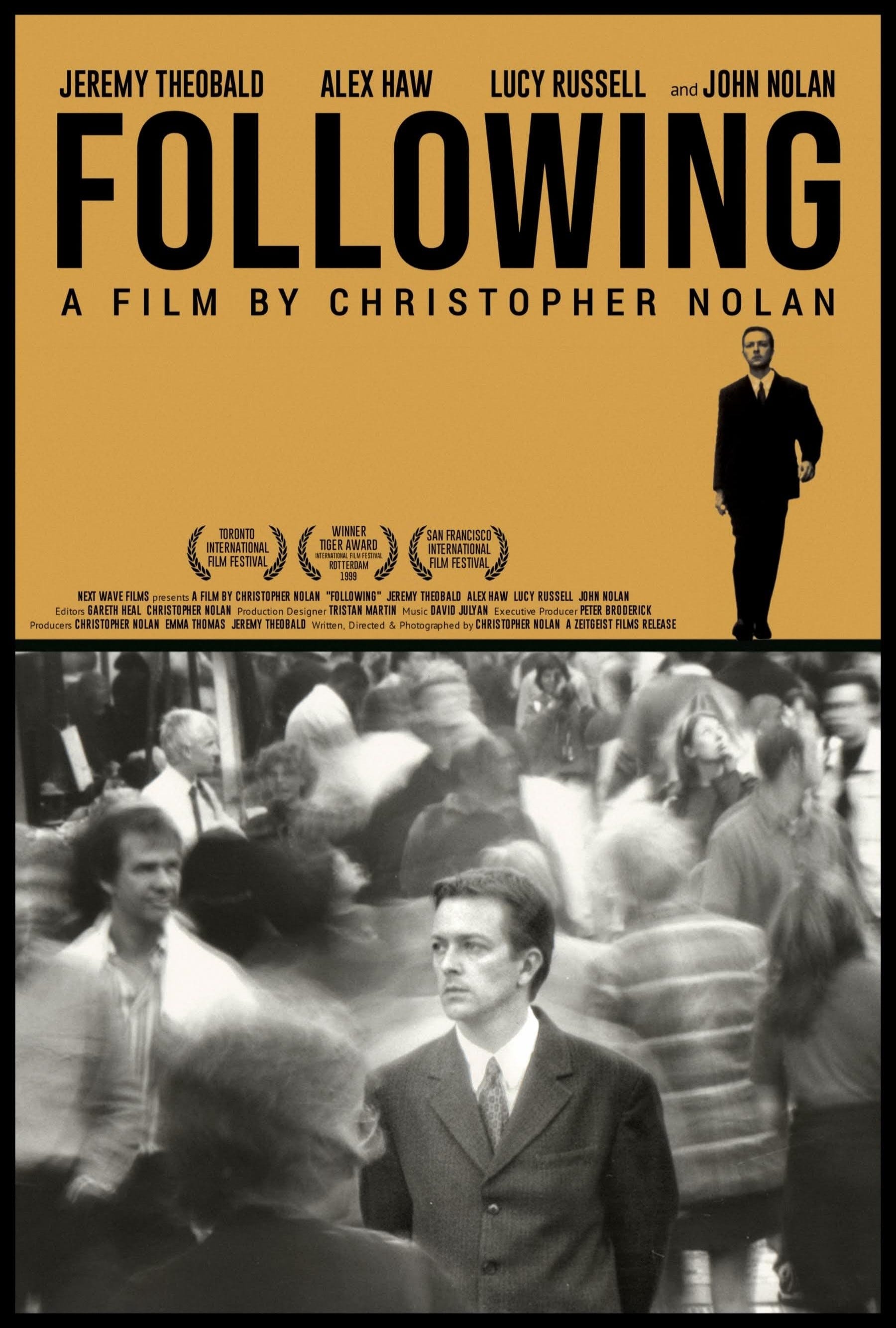
The film also employs a non-linear structure, a creative choice that Nolan has leaned into many times. Following jumps around to different narrative points as we see Bill plan, execute, and regret a high-stakes burglary. This choice didn’t affect the production budget, of course; in fact, there’s a “linear cut” of the film on the Criterion Collection release that probably works just as well. But as an unknown director, Nolan was looking for ways to stand out. I’m sure some believed he was employing a gimmick and/or aping other directors’ style—Pulp Fiction had only been released four years before Following’s premiere, and it spawned a slew of imitators in its wake—but this approach allowed his film to stand out among other microbudget fare. I think it shows a high level of commitment to the craft too. I mean, Bill cuts his own hair in the film. Haircuts are a tricky thing when you’re making a movie!6
Nolan intentionally scaled down when it came to the logistics of his production. But the content of Following played a factor as well.
I’ve done presentations at festivals structured around a particular piece of filmmaking wisdom: Don’t just write what you know, write what you have. In other words, if you’re writing a screenplay that you want to actually turn into a movie, focus on things you already have access to, whether that’s talented actor friends or free locations you can use or unique and interesting props.7 This approach is how my friends and I have been able to write and produce shorts, music videos, and a feature in the past.
There’s not really anything special about what you see in Following, though. The actors were unknown (aside from Christopher’s uncle John), the locations are mostly streets and homes and rooftops, and the settings are filled with everyday items. But when you stretch that conventional “Write what you know” approach just a little bit further and write what you want to know, it can pay dividends.
The allegory in Following is an obvious one. Nolan, a young writer interested in both personal and pulpy stories, made a film about a young writer who follows people around to get ideas for a novel. But it’s not a movie about a guy stuck in a room trying to overcome writer’s block. Nobody would want to see that. So Christopher had Bill do what he couldn’t do—befriend a common crook, break into strangers’ homes, steal their belongings, take steps along the path to a life of crime—and went where the story took him. He started with the personal and let it get pulpy from there. And the result was something not just interesting but entertaining.
Young writers often feel like they don’t have a story to tell; I know because I’ve felt that way myself. But Christopher Nolan wrote a story about a guy who didn’t have a story to tell, and that became the story. The best part about making movies with your friends is that the first step is free. All you have to do is overcome your fear of the blank page. (Just don’t follow any strangers around to face that fear, please.)
Following is now streaming on Kanopy, AMC+, and the Criterion Channel, and it is available to rent elsewhere.
I know the response to Disclosure Day has been rather tepid (I haven’t even seen it yet), but it’s already made its budget back twice over. I’m counting that as a big win for a director who’ll turn 80 later this year.
I am so curious where he goes from here. Does he attempt to do something even bigger like an Iliad companion piece or, I don’t know, the Bible? Or does he scale down to something more grounded? Personally, I’d like to see what a Nolan Beowulf looks like. (Robert Zemeckis should’ve gone to jail for his 2007 adaptation.)
Shouts out to Slamdance, a festival that I’ve never attended in person but have enjoyed many years by way of a virtual pass. I hope to attend the real deal someday.
The Batman connection is neat, but I think it’s more interesting that Bill has a Reservoir Dogs poster on his wall. Only six years after that film was released. Can you imagine the collective eyerolling that would take place if, say, the protagonist of a new horror film had a Midsommar poster in their bedroom?
I failed to mention this in a similar piece I wrote about Craig Brewer’s no-budget first feature, but it applies there as well. The black-and-white color palette is your friend, young filmmakers.
We shot a three days of pickups for Don’t Die about a year after principal photography, and even though we told him about it well in advance, our lead actor still went and got a haircut a few weeks before we were on set. I love that dude and hope to work with him again soon, but I’m still a little mad at him.
As I wrote a few years ago, Tammy and the T-Rex exists solely because a producer had temporary access to a large animatronic dinosaur.
Re: writing a story about a guy who doesn't have a story to tell and having that become the story, he does something similar with Inception too, where the weakness of the film's employed worldbuilding technique (which Inception arguably needs in order to work at all) has its emotional/thematic parallel interpreted for the actual storytelling core. Inception populates its dialogue with turgid exposition, just as our reality is populated by a few imaginations (of mostly straight white guys) and mistakenly/despondently insisted upon as fact.
The Zemeckis Beowulf mostly rocks!